Posts

TECHNOLOGY IN SPORTS: CRICKET
Image
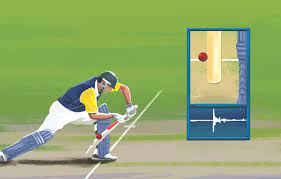
  TECHNOLOGY IN SPORTS: CRICKET So as we are approaching the ICC worldcup which will be hosted by India this year, let us address one of the very common questions that most people get while watching this sport. How do the umpires use Snicko and Hotspot? SNICKO: The Snickometer, more commonly called the Snicko, or as we call it, the Ultra-edge, is used to check whether the ball has edged the bat or glove in some way, during the judgement of dismissals of Leg Before Wicket, or Caught behind.  The Snickometer was invented by English computer scientist Allan Plaskett in the mid-1990s. The snickometer was introduced by Channel 4 in the UK, who also introduced the Hawk-Eye and the Red Zone, in 1999.  So how does this work?  The Snickometer uses a very sensitive mic attached to the stumps which is connected to an oscilloscope that measures the sound waves. The mic captures the sound at the moment when the ball nicks the bat. The sound is amplified and filtered out to certai...

Lithium-Ion Batteries Recycling

Image
  Lithium-ion Battery Recycling   Introduction and uses: Lithium-ion batteries are amongst the most commonly used in the world, with the usage varying from handheld small electronic devices such as electronics, toys, wireless headphones to electric cars and energy storage systems we use today. These batteries are greatly preferred due to their high energy density, i.e. the ability to store energy efficiently in a given amount of space. Lithium batteries are smaller and lighter than other types of batteries, and have a greater energy density, leading to its greater use compared to other kinds of batteries. Lithium cells are of two types- one made of lithium metal which are single use and non-rechargeable, and the other which are made out of lithium and polymer and are multi use and non-rechargeable.   Structure of a li-ion battery: A lithium ion battery comprises of a cathode, an anode and an electrolyte. The anode is usually made of carbon(graphite), the catho...

IONIC THRUSTERS

Image
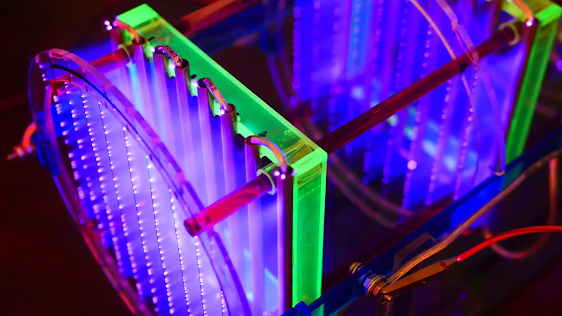
   Do you know the majority of mass of a spacecraft at the time of launch is not of the satellite but of the propellent or the fuel which is used to lift it. What if we would be able to minimize this weight of fuel . Can we try for electricity ?   (source:  https://www.thedrive.com/news/youtuber-builds-wild-looking-ion-thruster-with-no-moving-parts-and-it-actually-works  )     Electric propulsion systems are becoming more popular due to their efficiency and ability to minimise the quantity of fuel required. In this blog we will look at one of the promising technology in the field of electric thrusters. The ion thruster is one sort of electric propulsion technology. In this we will look at how ion thrusters function, as well as their advantages, disadvantages, and uses.   Let’s start with an ‘atom’.. Atoms are mainly made up of three subatomic particles: neutrons, protons, and electrons. Neutrons have a large mass but no electric charge, whereas pr...

WEB 3.0

Image
  Imagine a world where the internet isn't just a place to browse, shop, and share cat videos, but a decentralized network of interconnected platforms and applications that give users control over their data, privacy, and digital identity. This is the vision of Web 3.0, the next evolution of the internet that promises to transform the way we interact with technology and each other. From blockchain-based social networks and peer-to-peer marketplaces to AI-powered chatbots and immersive virtual worlds, Web 3.0 is poised to unlock a new era of innovation, collaboration, and value creation. But what exactly is Web 3.0, and how does it differ from the current web we know? Let's dive in.   HISTORY: WEB 1.0 and WEB 2.0 Web 1.0, also known as the "static web," emerged in the late 1990s and early 2000s. It was characterized by simple, static web pages that provided information but didn't allow for much interactivity or user participation. Websites were largely created and ...

Edge Computing

Image
    Do you know what edge computing is? Although it may seem like a difficult and technical idea, it's actually quite cool. Imagine having complete access to all of your data and programs without the requirement of a central hub. Edge computing is all about doing that! Now, I know what you're thinking. "But wait, isn't that what the cloud is for? "  Yes, the cloud is great for many things, but edge computing takes things to a whole new level. Instead of relying on a single server or data center, edge computing allows for processing and storage to occur closer to the devices that need it, such as your smartphone or smartwatch. This means faster response times, less latency, and a more seamless experience overall.                             But let's slow things down a bit and take a closer look at how edge computing works. Imagine you're at a concert, and you want to take a video of your favourite song....

BharOS – An Indigenous Operating System

Image
                                                      Image Credits - TechThirsty                                                                                                                JandK Operations Private Limited (JandKops)   IIT Madras -incubated company had developed an indigenous mobile operating system known as BharOS . The BharOS project aims to reduce the dependence on foreign operating systems in smartphones and promote the use of locally developed technology. IIT Madras-incubated company had developed an indigenous mobile operating system known as BharOS...