Posts

ZERO EMISSION ATOMIC ENERGY: The Future of Energy Generation & Storage Series
Image
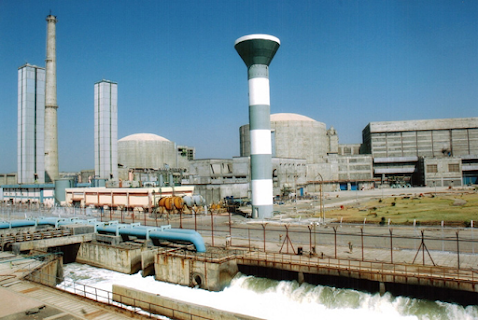
   ZERO EMISSION ATOMIC ENERGY Haven’t we all thought of an ideal form of energy to run the world; one which would be clean & also more efficient? There exists such a source of energy: the zero-emission energy – Atomic energy. TARAPUR ATOMIC POWER STATION Atomic energy is a clean energy source with high reliability and high energy density. It has one of the smallest carbon footprints and may be our answer to positively impacting climate change and greenhouse gas emissions. Some experts take a step forward to even say that it is a contestant as one of our answers for the energy gap. But what exactly is atomic energy, the one solution to all our problems? Atomic energy or nuclear energy is the energy that is released in significant amount through the processes that affect the atomic nuclei, the dense cores of the atom housing protons and neutrons.  The two ways to release this energy are nuclear fission: where one larger atomic nucleus splits into two smaller atomi...
SAND BATTERIES: The Future of Energy Generation & Storage Series

Image
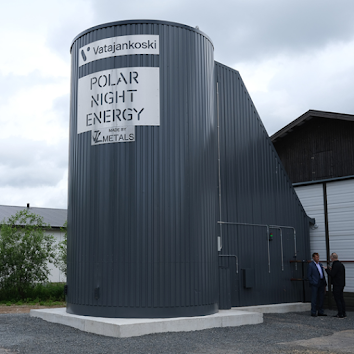
SAND BATTERIES   T he Future of Energy Generation & Storage (series)       Imagine walking on a beach at night, feeling the warmth of the sand under your feet. You might wonder how the sand can retain so much heat even after the sun has set. What if you could use this amazing property of sand to store and generate energy from renewable sources? This is not a fantasy, but a reality. In this blog, we will explore the fascinating technology of the sand battery , a new and promising solution for the green energy transition.   Solar and wind energy sources are becoming increasingly popular and cost-effective, however, they also present a challenge in terms of how to effectively store the surplus energy they generate when the need is low, as well as how to ensure a consistent and reliable supply of energy when the need is high. Conventional batteries are one of the solutions, however, they come with a number of drawbacks, such as their high cost, negativ...

VIRTUAL MIRRORS :Unveiling the Magic of Digital Twins

Image
VIRTUAL MIRRORS Unveiling the Magic of Digital Twins Hey, curious minds! Have you ever heard of digital twins? It may sound like something straight out of a sci-fi movie, but it's real, and it's fascinating! Whether you're an engineer, a healthcare professional, a city planner, or just someone eager to learn about cutting-edge technologies, this blog is for you. Buckle up and get ready for an exhilarating adventure into the mesmerizing world of digital twins, where reality seamlessly blends with virtuality. What Exactly are Digital Twins and How Do They Work? Just Imagine, you have a virtual clone of your car, your city, or even your own body! That's what digital twins are all about. They are virtual replicas of real-world objects, systems, or even people. But here's the magic—these virtual twins don't just sit there looking pretty; they actively simulate the behaviour of their real counterparts using real-time data. At the heart of the Internet of Things (IoT) ...

TECHNOLOGY IN SPORTS: CRICKET

Image
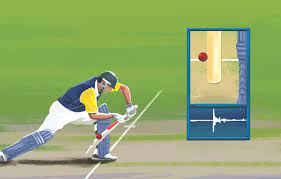
  TECHNOLOGY IN SPORTS: CRICKET So as we are approaching the ICC worldcup which will be hosted by India this year, let us address one of the very common questions that most people get while watching this sport. How do the umpires use Snicko and Hotspot? SNICKO: The Snickometer, more commonly called the Snicko, or as we call it, the Ultra-edge, is used to check whether the ball has edged the bat or glove in some way, during the judgement of dismissals of Leg Before Wicket, or Caught behind.  The Snickometer was invented by English computer scientist Allan Plaskett in the mid-1990s. The snickometer was introduced by Channel 4 in the UK, who also introduced the Hawk-Eye and the Red Zone, in 1999.  So how does this work?  The Snickometer uses a very sensitive mic attached to the stumps which is connected to an oscilloscope that measures the sound waves. The mic captures the sound at the moment when the ball nicks the bat. The sound is amplified and filtered out to certai...

Lithium-Ion Batteries Recycling

Image
  Lithium-ion Battery Recycling   Introduction and uses: Lithium-ion batteries are amongst the most commonly used in the world, with the usage varying from handheld small electronic devices such as electronics, toys, wireless headphones to electric cars and energy storage systems we use today. These batteries are greatly preferred due to their high energy density, i.e. the ability to store energy efficiently in a given amount of space. Lithium batteries are smaller and lighter than other types of batteries, and have a greater energy density, leading to its greater use compared to other kinds of batteries. Lithium cells are of two types- one made of lithium metal which are single use and non-rechargeable, and the other which are made out of lithium and polymer and are multi use and non-rechargeable.   Structure of a li-ion battery: A lithium ion battery comprises of a cathode, an anode and an electrolyte. The anode is usually made of carbon(graphite), the catho...

IONIC THRUSTERS

Image
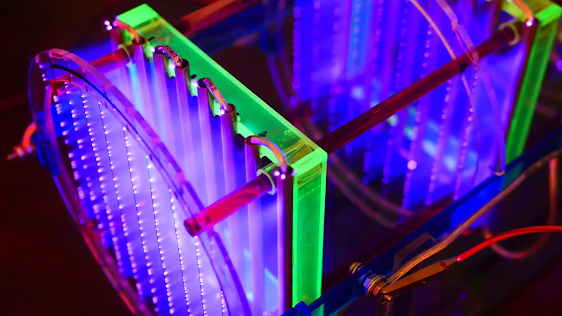
   Do you know the majority of mass of a spacecraft at the time of launch is not of the satellite but of the propellent or the fuel which is used to lift it. What if we would be able to minimize this weight of fuel . Can we try for electricity ?   (source:  https://www.thedrive.com/news/youtuber-builds-wild-looking-ion-thruster-with-no-moving-parts-and-it-actually-works  )     Electric propulsion systems are becoming more popular due to their efficiency and ability to minimise the quantity of fuel required. In this blog we will look at one of the promising technology in the field of electric thrusters. The ion thruster is one sort of electric propulsion technology. In this we will look at how ion thrusters function, as well as their advantages, disadvantages, and uses.   Let’s start with an ‘atom’.. Atoms are mainly made up of three subatomic particles: neutrons, protons, and electrons. Neutrons have a large mass but no electric charge, whereas pr...